
About Gabriel Dishaw

Who is Gabriel Dishaw
Gabriel Dishaw is a Sculptor / Upcycler based in Indianapolis, Indiana. Gabriel creates unique sculptures using upcycled materials from luxury brands such as Louis Vuitton, Gucci, and discarded electronic components and other found objects. He was born in 1980 and has been creating for 25-plus years.
Dishaw's work explores themes such as the intersection of high fashion, pop culture, technology, and sustainability through various forms of upcycling. His series range from Louis Vuitton-inspired Stormtroopers and Mortal Kombat Masks to Gucci-embellished Pokemon and Mythical creatures reimagined through discarded E-waste. His art has been exhibited in numerous galleries and museums throughout the United States.
Gabriel’s Artist Statement
My passion for working with metal and mechanical objects has been essential in the evolution of my art. It provides me an avenue to express myself in a way that brings new life to materials such as typewriters, adding machines and old computers – technology that would normally end up in a landfill. My mission is to create dialogue and help find creative, environmentally sound ways of re-purposing e-waste.
Gabriel’s Social Media Accounts
The best way to follow the work as it happens is on social. I post new pieces, works in progress, and behind-the-scenes builds across Instagram, TikTok, YouTube, Facebook, Pinterest, X, Tumblr, and Behance. If you want to see where the ideas go before they become finished sculptures, that's where to find me. Follow along here.
What was your first project?
My first piece was an abstract sculpture – which I still have to this day – titled “Mary on a Donkey.” I created it for the local DOW Chemical Holiday Art Show in high school. To my surprise it took the top honors in the 3D art category. I plan to keep it as a reminder of my humble beginnings as an upcycler and sculptor.
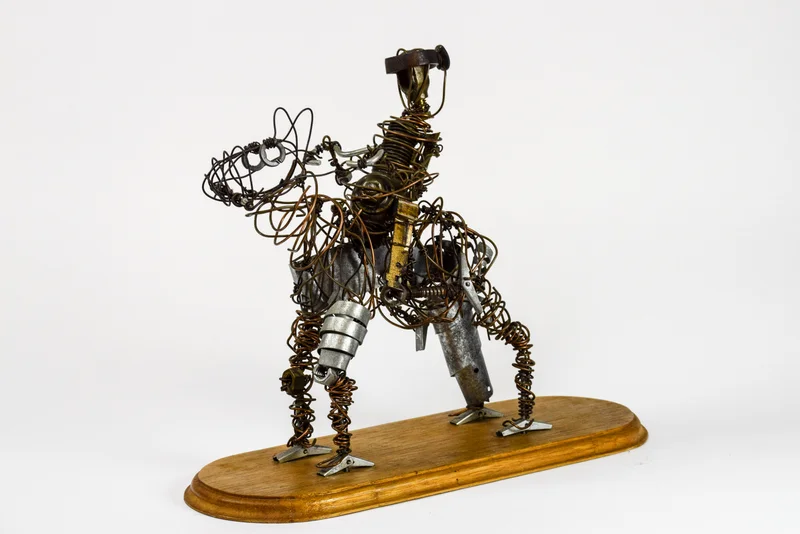
Mary on a Donkey
Publications and Press Room
Gabriel's work has been featured in major publications and exhibitions worldwide. Visit the Press Room for media coverage and interviews, or browse Exhibits & Publications for a full archive of features, editorials, and gallery appearances.
Interested in Exploring Upcycling?
If you've ever wondered what upcycling actually looks like in practice, the Upcycled Keyboard Vader project is the perfect place to start. Built entirely from salvaged keyboard keys, circuitry, and wire, this step-by-step tutorial walks you through the full process — from disassembling two old keyboards all the way to a finished Darth Vader wall sculpture. No prior art experience needed. Just a few basic tools, some patience, and a couple of keyboards headed for the trash. It's the same core idea behind every sculpture in the studio, scaled down into something anyone can try at home.
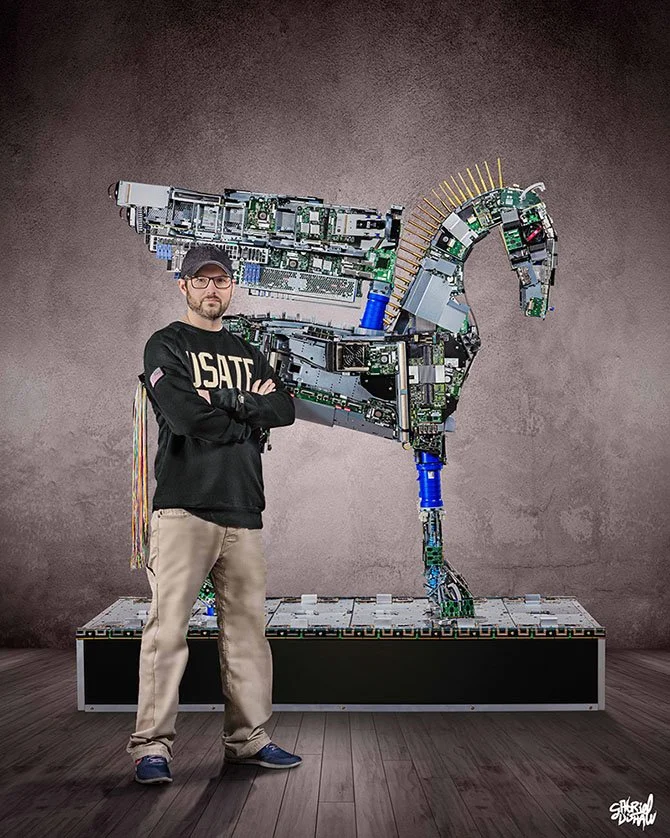
Gabriel’s work has two distinct approaches/series
Both approaches are based on a foundation of upcycling or repurposing materials but prioritize certain features.
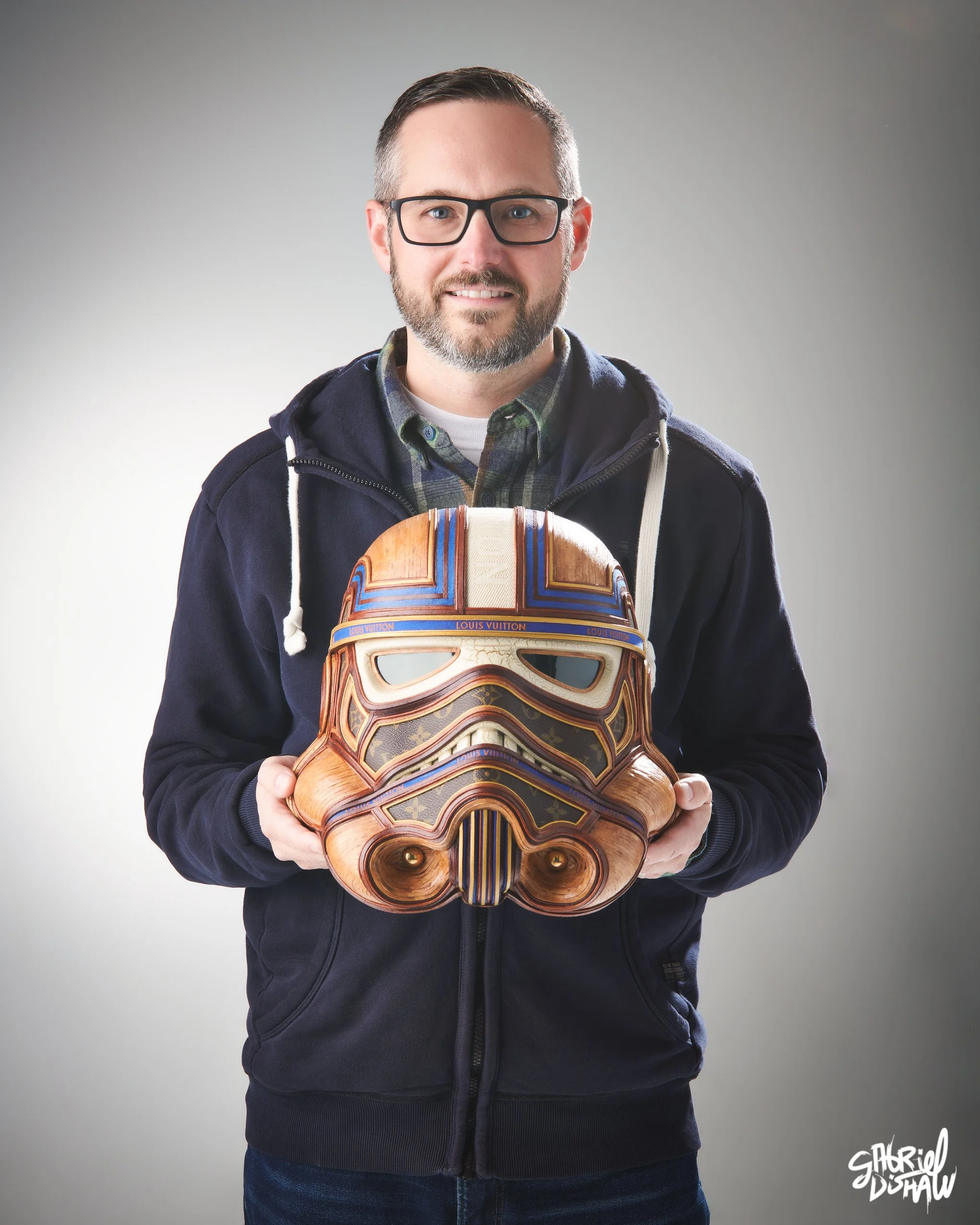
Luxury Series - In this series, he explores the intersection of fashion and pop culture, using upcycled luxury goods, leather, and hardware to achieve an elevated look, paying special attention to craftsmanship synonymous with luxury. This is all to express his love and admiration of these iconic pop-related artifacts and to bring attention to their contribution to our culture.
Examples of this approach:
E-waste / Upcycling Series - In this series, he lean more heavily into upcycling with the materials or found objects to drive the approach. This produces a looser feel that allows for the sum of the materials to form a new object. As you draw closer to the sculpture, you pick up on the details and objects used taking you on another journey of discovery to identify the individual pieces that make up the sculpture.
Examples of this approach:
What is the story behind your artwork series?
Each series represents a personal interest or passion of mine. For instance the sneakers series – I have a sneaker collection in excess of 380 pairs. That bleeds over to my artwork which consists of the shoes I like the most. My love of sci-fi and all things “Star Wars” has significantly influenced my creature and figurative sculptures. I’m constantly looking for new ways to use old materials, showcasing them in a new light that is of interest to me. In that respect one sculpture can easily balloon into a series.
What is the story behind your Luxury Series?
For Gabriel Dishaw, it’s always been about the journey. For him, the creative process starts with disassembling items and then reimaging them as new objects. Through his work, he is also able to express his eagerness to inspire dialogue on reducing waste and participate in creative solutions for utilizing materials that would often be discarded after its intended use and repurposes them so others can find enjoyment.
His Luxury Series builds upon this philosophy. With each piece, Gabriel has taken characters and universes from his childhood as well as his passion for science fiction and elevated them from their original meanings and stories by using textiles from luxurious brands. Whether based on a toy he grew up with or a film he’s rewatched countless times, each piece reflects a moment in time through a modern, fashionable twist.
Where do you draw inspiration? What’s your process?
Generally I begin a project without any defined plan. Instead, I look for how well pieces work together or how they move and then let those materials drive the color scheme or overall endpoint of where an idea will land, what it will turn into. For instance, the inspiration for one of my horse sculptures, “Rearing Horse,” came to me while taking apart an old adding machine. Some of the pieces reminded me of a horse’s head. The rest just fell into place. For a commissioned pieces, it’s a bit of a different story. The theme is very much inspired by the client, their history and the story to be told through my art.