Background on My Different Approaches and Series.
Q: What are the two main approaches Gabriel Dishaw uses in his artwork?
A: I divide my work into two upcycling‑based series.
The Luxury Series explores fashion and pop culture with upcycled luxury goods, leather and hardware, elevating pieces like Dark Side Couture and SnorLucci + Pokéball.
The E‑waste/Upcycling Series leans on found objects and e‑waste to form looser, more organic sculptures, inviting you to spot individual components—as seen in Upcycled Pegasus and Upcycled Sun King
Both approaches are based on upcycling or repurposing materials, but prioritize different features.
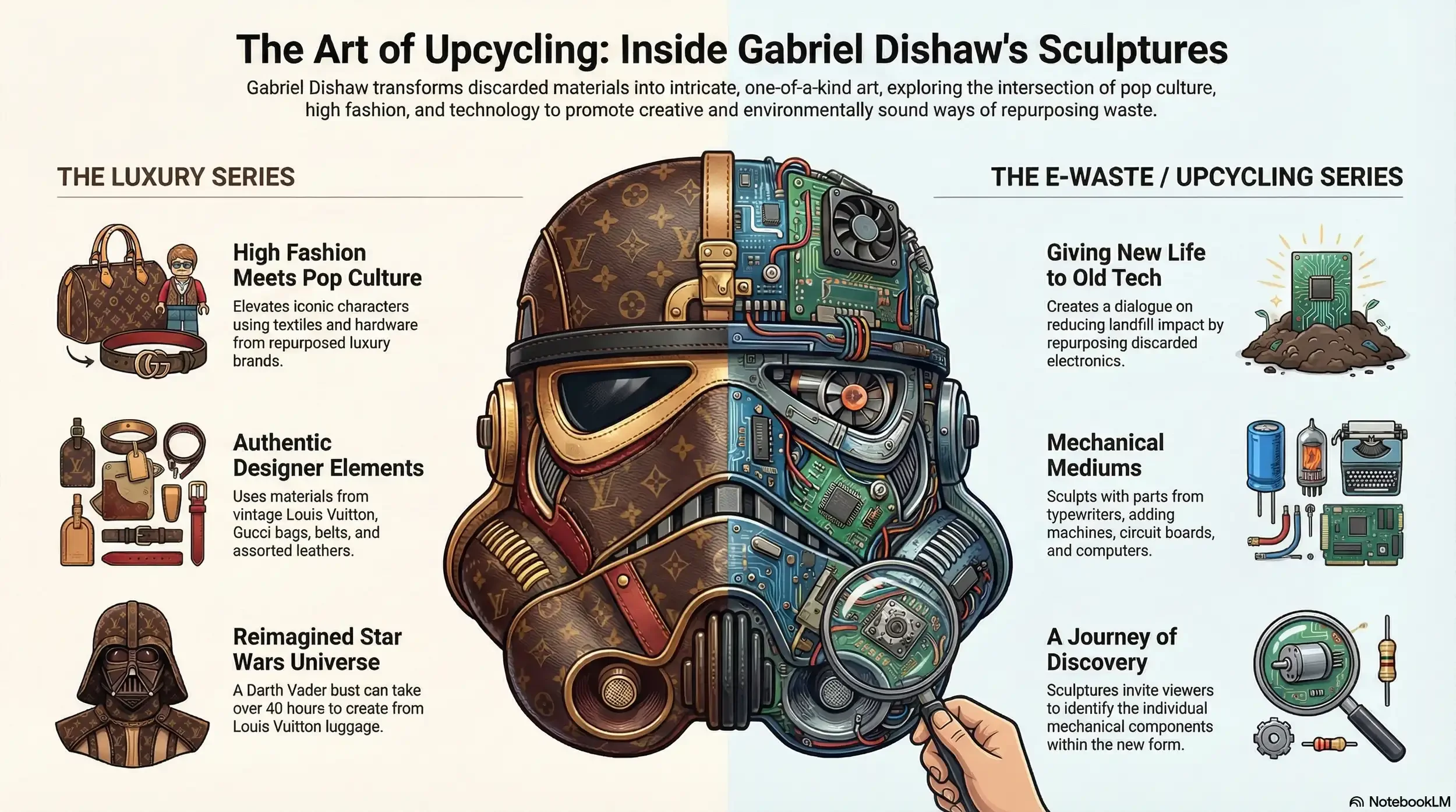
An Infographic of my two distinct approaches
Q: How does your Luxury Series differ from your E‑waste/Upcycling Series?
A: The Luxury Series combines upcycled designer goods with pop‑culture themes, using leather and hardware to achieve a polished, high‑fashion look. In contrast, the E‑waste/Upcycling Series embraces a looser aesthetic, using discarded tech and found objects to create pieces whose individual parts reveal themselves on closer inspection.
Q: Why do you separate your sculptures into different series, and what themes do they explore?
A: I use two approaches to highlight different facets of upcycling. The Luxury Series honors iconic pop‑culture artifacts by refashioning designer materials into elevated art. The E‑waste/Upcycling Series underscores sustainability by transforming everyday debris into cohesive works, encouraging viewers to identify the objects within each sculpture.
Luxury Series / Approach Examples
Luxury Series - In this series, I explore the intersection of fashion and pop culture, using upcycled luxury goods, leather, and hardware to achieve an elevated look, paying special attention to craftsmanship synonymous with luxury. This is all to express my love and admiration for these iconic pop-related artifacts and to highlight their contribution to our culture.

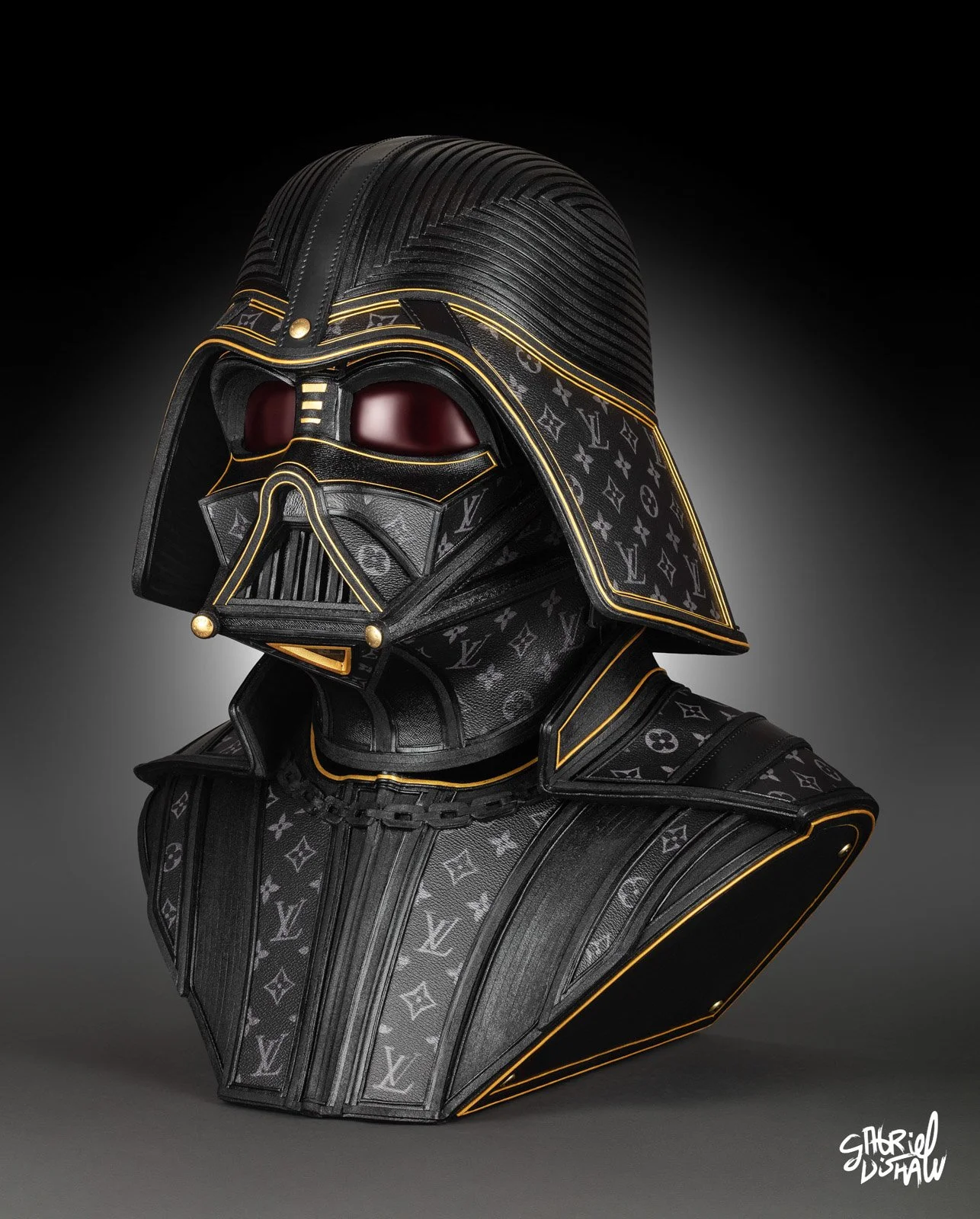


E-Waste Series / Approach Examples
E-waste / Upcycling Series - In this series, I lean more heavily on upcycling with materials or found objects to drive the approach. This produces a looser feel that allows for the sum of the materials to form a new object. As you draw closer to the sculpture, you pick up on the details and objects used, taking you on another journey of discovery to identify the individual pieces that make up the sculpture.